
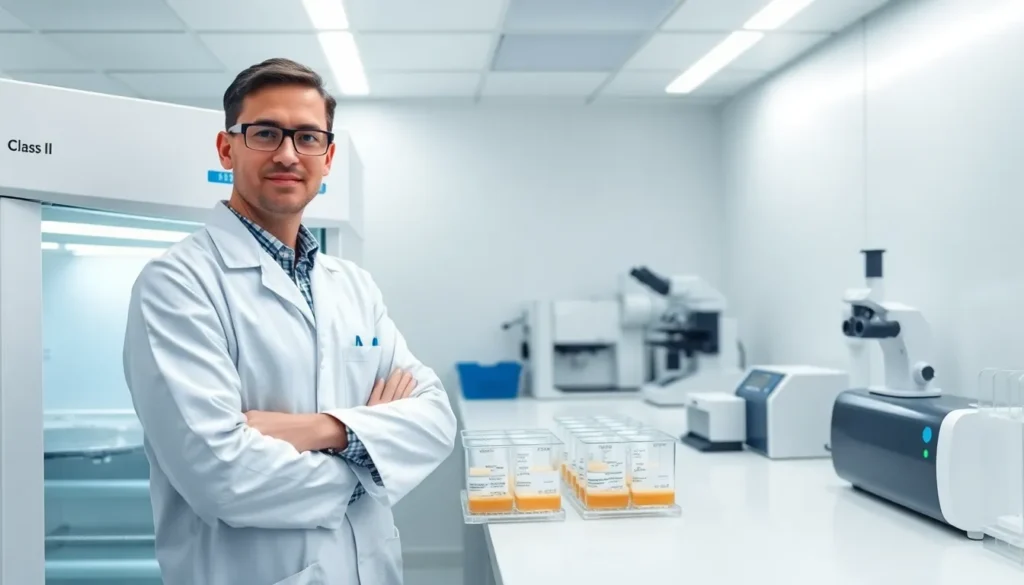

Viral culture tools form the backbone of modern virology research and vaccine development. Scientists rely on these specialized instruments and supplies to grow, maintain, and study viral cell lines in controlled laboratory settings. From basic flasks to advanced biosafety equipment, the right tools determine success or failure in viral research.
This guide covers the essential equipment, media, reagents, and safety practices researchers need. Whether setting up a new lab or optimizing an existing workflow, understanding viral culture tools helps teams produce consistent, reliable results.
Table of Contents
ToggleKey Takeaways
- Viral culture tools include cell culture vessels, incubation equipment, sterile handling supplies, safety equipment, and analysis instruments essential for virology research.
- Biosafety cabinets and CO2 incubators are critical equipment that protect researchers while maintaining ideal conditions for viral cell growth.
- Media and reagents like DMEM, fetal bovine serum, and trypsin directly impact cell health and viral yield in culture workflows.
- Proper safety protocols—including PPE, decontamination procedures, and waste management—are non-negotiable when working with viral culture tools.
- Matching your tools to the specific virus and host cell line ensures consistent, reliable results in vaccine development and antiviral research.
- Formal training and documented standard operating procedures are essential for every team member handling viral cultures.
What Are Viral Culture Tools?
Viral culture tools include all equipment, supplies, and consumables used to propagate viruses in host cells. These tools enable researchers to isolate viruses, amplify viral stocks, test antiviral compounds, and produce vaccines.
The category spans several product types:
- Cell culture vessels – Flasks, plates, roller bottles, and bioreactors that house growing cells
- Incubation equipment – CO2 incubators and shakers that maintain ideal temperature and gas levels
- Sterile handling tools – Pipettes, serological tips, and cell scrapers for aseptic technique
- Safety equipment – Biosafety cabinets, personal protective equipment, and waste containers
- Analysis instruments – Microscopes, spectrophotometers, and flow cytometers for monitoring cultures
Viral culture tools differ from standard cell culture supplies in important ways. Viral work often requires higher biosafety levels, specialized containment, and additional decontamination protocols. Many viruses demand specific host cell lines, which means researchers must match their tools to the virus they study.
For example, influenza researchers typically use MDCK cells grown in treated polystyrene flasks. HIV studies often employ primary human T-cells or specialized continuous lines. Each application requires viral culture tools suited to the host cell’s needs and the virus’s biosafety classification.
Key Equipment for Viral Cell Culture
Success in viral research starts with quality equipment. Here’s what every viral culture lab needs.
Biosafety Cabinets
Class II biosafety cabinets protect both the researcher and the culture from contamination. These units use HEPA-filtered laminar airflow to create a sterile work zone. Most viral culture labs require Class II Type A2 or B2 cabinets, depending on the pathogens handled.
CO2 Incubators
Mammalian host cells require precise temperature (typically 37°C) and CO2 levels (usually 5%) to thrive. Modern incubators offer humidity control, contamination-resistant copper interiors, and data logging features. For viral culture tools, look for models with quick recovery times after door openings.
Culture Vessels
T-flasks remain the workhorse for small-scale viral production. Multi-layer flasks increase surface area without consuming more incubator space. For large-scale work, spinner flasks or single-use bioreactors accommodate suspension cultures. Cell factories provide maximum surface area for adherent cell expansion.
Centrifuges
Researchers use centrifuges to pellet cells, clarify viral supernatants, and concentrate virus particles. Benchtop models handle routine separations, while ultracentrifuges enable density gradient purification of viral stocks.
Microscopes
Inverted phase-contrast microscopes let scientists observe cells without removing them from culture vessels. This visual inspection helps assess confluence, morphology, and cytopathic effects caused by viral infection. Fluorescence microscopy adds capability for tracking labeled viruses or proteins.
Media and Reagents for Optimal Growth
Viral culture tools extend beyond hardware. Media and reagents directly impact cell health and viral yield.
Basal Media
DMEM (Dulbecco’s Modified Eagle Medium) and RPMI 1640 serve most mammalian cell lines. These formulations provide amino acids, vitamins, glucose, and salts. Serum-free options reduce batch variability and simplify downstream purification.
Serum and Supplements
Fetal bovine serum (FBS) supplies growth factors and proteins that support cell proliferation. Typical concentrations range from 2% to 10%. But, serum introduces variability. Many labs now use defined serum replacements or chemically defined media for consistency.
Other common supplements include:
- L-glutamine or GlutaMAX for energy metabolism
- Antibiotics like penicillin-streptomycin to prevent bacterial contamination
- Non-essential amino acids for certain cell lines
- Sodium pyruvate for additional energy support
Trypsin and Dissociation Reagents
Adherent cells need enzymatic or non-enzymatic solutions to detach from vessel surfaces during passaging. Trypsin-EDTA remains the standard choice, though gentler alternatives exist for sensitive cell types. Viral culture tools for dissociation should be validated for each cell line to prevent damage.
Cryopreservation Supplies
DMSO-based freezing media allows long-term storage of cell stocks in liquid nitrogen. Controlled-rate freezing containers ensure consistent cooling. Proper cryopreservation protects against contamination events and maintains backup stocks of valuable cell lines.
Safety Considerations and Best Practices
Working with viruses demands strict safety protocols. The right viral culture tools mean nothing without proper procedures.
Biosafety Level Requirements
Viruses fall into Risk Groups 1 through 4 based on their danger to humans. Most common research viruses require BSL-2 facilities with Class II biosafety cabinets, appropriate PPE, and restricted access. High-consequence pathogens need BSL-3 or BSL-4 containment with additional engineering controls.
Personal Protective Equipment
Lab coats, gloves, and eye protection form the minimum PPE for viral work. Double gloving reduces exposure risk during spills. Respiratory protection becomes necessary when aerosol generation is possible or when working with airborne pathogens.
Decontamination Protocols
All viral culture tools must undergo proper decontamination before cleaning or disposal. Autoclaving destroys most biological agents. Chemical disinfectants like 10% bleach or 70% ethanol handle surface decontamination. UV light supplements other methods but shouldn’t serve as the sole approach.
Waste Management
Biohazardous waste requires treatment before disposal. Liquid waste goes into containers with appropriate disinfectant. Solid waste enters autoclave bags for steam sterilization. Sharps need puncture-resistant containers. Documentation tracks waste from generation through final disposal.
Training and Documentation
Every team member handling viral culture tools needs formal training on biosafety practices. Standard operating procedures should cover each protocol. Regular competency assessments verify that techniques remain sharp. Incident reporting systems catch problems before they escalate.


